
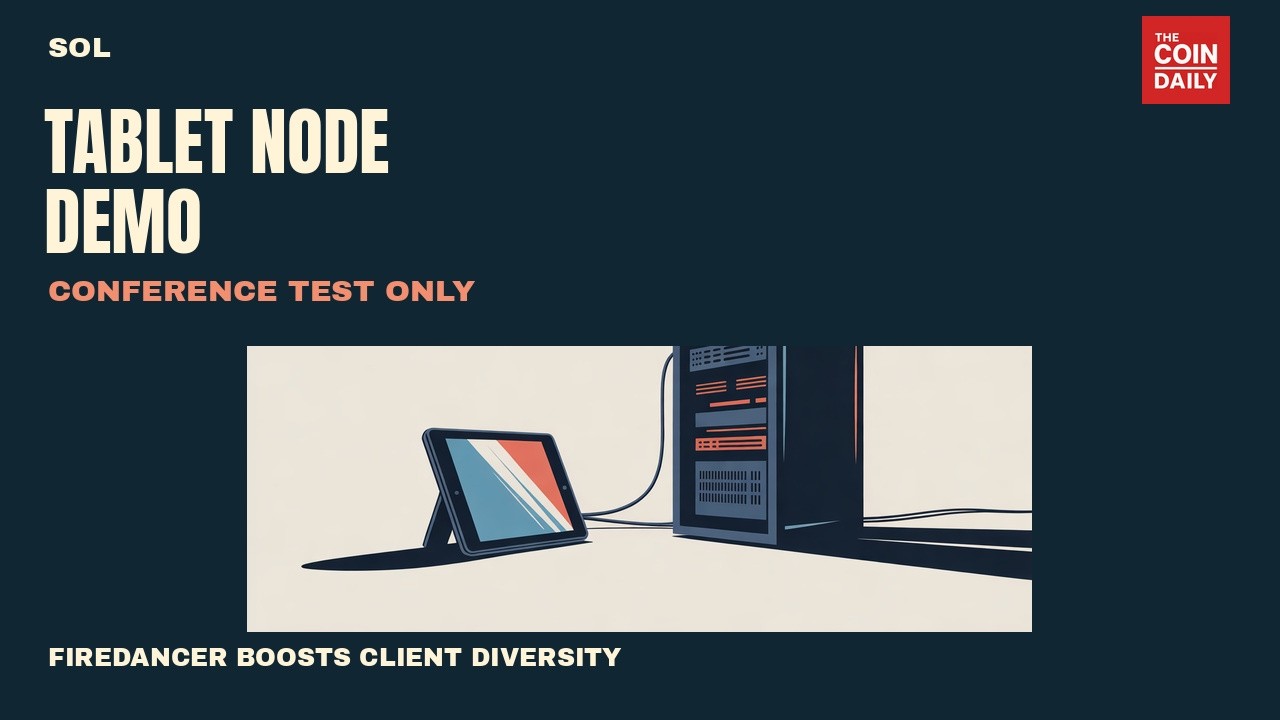
At Solana’s Breakpoint event in London, developers demonstrated a Firedancer mainnet node running on a tablet. The setup used less than one CPU core, 20 gigabytes of memory, and a five-G connection. In roughly 10 seconds, it caught up to the latest block and began voting. Solana co-founder Anatoly Yakovenko marked the result with a brief post: “We did it.”
Firedancer is an independent Solana validator client developed by Jump Crypto. Its role is broader than making another piece of software run: an additional client can reduce reliance on the dominant validator software and improve client diversity. The tablet demo also puts a practical question behind Solana’s performance claims. If validator functions can run on less demanding hardware, more operators may be able to participate, addressing a recurring criticism that running Solana infrastructure requires relatively powerful machines.
But this was a conference demonstration, not proof that the same setup is ready for routine production use. So the demo shows what Firedancer managed in a live test; it does not establish that those lighter requirements will hold under everyday operating conditions. The next checkpoint is whether Solana can make this level of performance reliable outside the event setting. That distinction matters: lower hardware demands could broaden access, but the demonstration alone does not prove a broader change in who can operate a validator.